A Holistic DeFi Risk Assessment Framework for Institutions
Jonas Levanas · Editorial
FEATURING
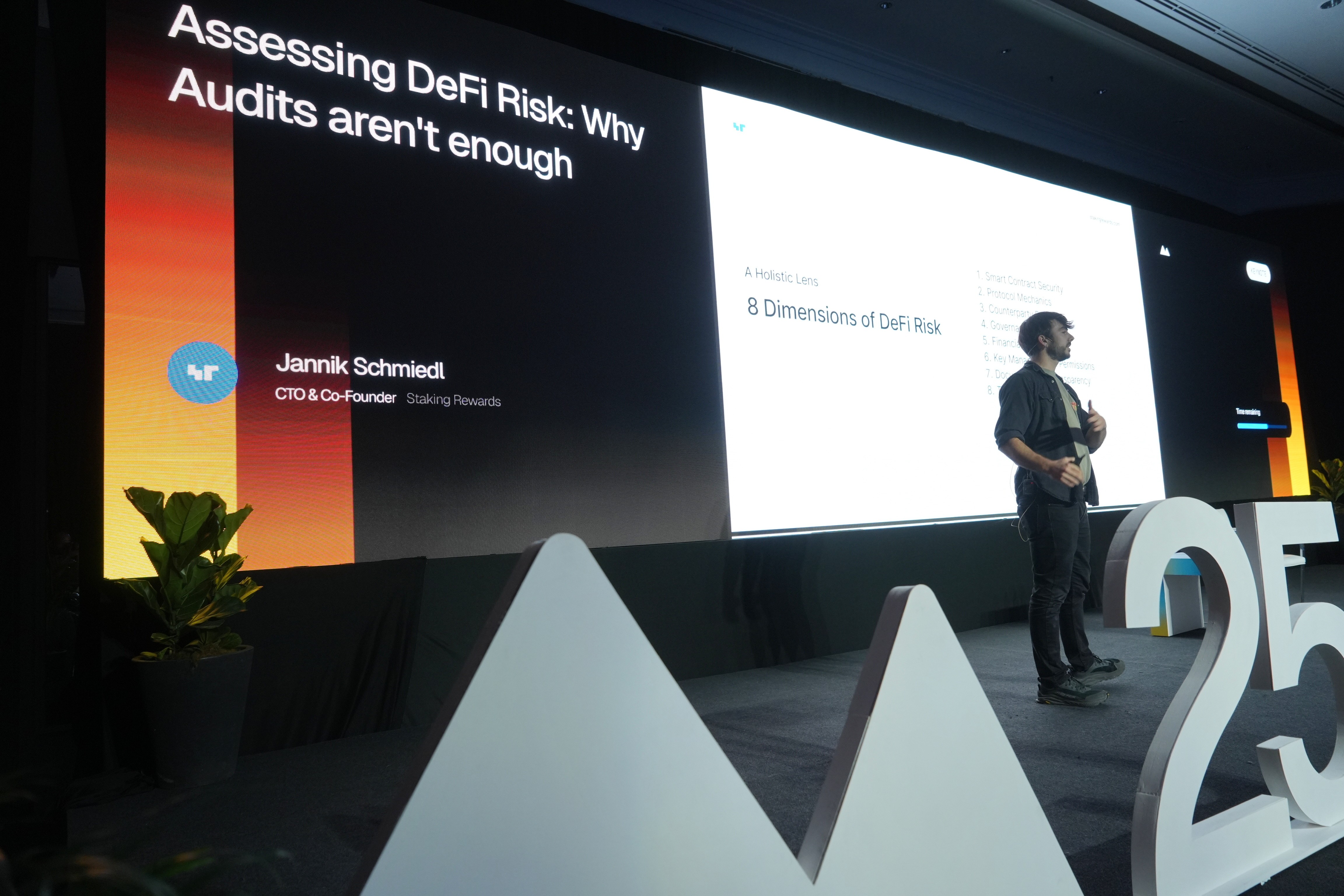
A protocol with a reputable audit, investor backing, and frequent industry recommendations just lost $93 million anyway. The culprit wasn't a smart contract bug. It was an external manager who lost everything.
A protocol with a reputable audit, investor backing, and frequent industry recommendations just lost $93 million anyway. The culprit wasn't a smart contract bug. It was an external manager who lost everything, a risk dimension that code audits simply don't touch. For institutions evaluating digital asset yield, this failure exposes an uncomfortable truth: single-factor due diligence, no matter how rigorous, misses at least seven other dimensions where principal can vanish.
Stream protocol was audited by Zenit, described as a "very reputable auditing firm." The team looked legitimate. Investors had backed them. Industry participants recommended them frequently. And yet, $93 million evaporated. Here's the uncomfortable reality: many protocols that have been exploited had audits. They had many audits.
Audits verify code at a point in time. They don't verify operational controls, counterparty arrangements, or governance structures. Relying on audit status alone is like evaluating a jet engine by the paint job. Smart contracts should be open source, independently audited, and re-audited after protocol upgrades. But that's table stakes, not the whole picture.
Stream didn't fail because of an unaudited code path. It failed because real people ran opaque leverage strategies through brittle structures. The protocol had delegated funds to an external manager. This is counterparty risk in its purest form. No smart contract vulnerability required.
Institutions must ask: what percentage of TVL depends on external protocols or managers? What contractual recourse exists? If the answer is unclear, that's a red flag. Delegation without transparency creates unmonitored credit and operational risk that can result in total loss.
Stream's collapse didn't stay contained. XUSD depegged, ripping back across the whole industry. A single protocol failure triggered cascading effects across multiple asset classes and venues. This is systemic risk, DeFi-style.
For institutional portfolios, stablecoin concentration limits matter. Real-time depeg monitoring with automated position reduction triggers isn't optional anymore. Exposure to one stablecoin failure can propagate losses far beyond the initial allocation.
Code audits won't tell you who controls the keys. They won't reveal multisig distribution or signing rights. Admin key compromise or malicious governance action can drain funds regardless of smart contract soundness. Institutions need to mandate disclosure of multisig configurations, timelocks, and admin key custody arrangements before any allocation.
Key takeaways
- —Single-factor due diligence (audits alone) misses at least seven dimensions where principal can vanish
- —External manager exposure is the hidden counterparty risk that code audits don't cover
- —Stablecoin depeg contagion can cascade across the entire DeFi landscape from a single failure
- —Mandate disclosure of multisig configurations, timelocks, and admin key custody before any allocation
Related articles
How Stablecoins Are Reshaping Institutional Settlement in 2025
Stablecoins now settle cross-border transfers in seconds that legacy rails take days to complete. Japan's SMBC is already piloting a Cosmos-based settlement layer for the Hong Kong-Japan corridor.
26 Jan 2026 · 3 min read
KeynoteInstitutional Considerations for Lido ST Vaults and Delegated Staking
Roughly 70% of staked Ethereum sits locked with no liquidity access. Lido's upcoming ST Vaults aim to change that, letting asset managers select specific node operators while still minting stETH.
23 Jan 2026 · 3 min read
PanelTop Institutional Yield Factors From Wallet Segregation to 21-Day Unstaking
Digital Asset Treasuries are now trading at 10–15% discounts to NAV, a sharp reversal from the premiums they once commanded. Unlike ETFs, DATs lack arbitrage mechanisms to close that gap.
23 Jan 2026 · 3 min read